
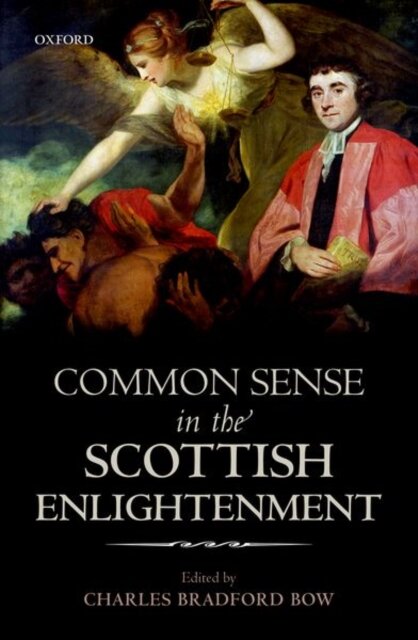
Common Sense in the Scottish Enlightenment
€139.90
Product Information
| ISBN | 9780198783909 |
|---|---|
| Publisher | Oxford University Press |
| Format | Hardcover |
| Number of pages | 238 |
| Weight (kg) | 0.518 |
| Publishing Date | 03/05/2018 |
| Price (excl. tax) | €131.98 |
| Tax | €7.92 |
| Price (incl. tax) | €139.90 |
| Availability | 1 unit in external warehouse |
Product Description
Common sense philosophy was one of eighteenth-century Scotland''s most original intellectual products. It developed as a viable alternative to modern philosophical scepticism, known as the ''Ideal Theory'' or ''the way of ideas''. The nine specially written essays in this volume explore the philosophical and historical significance of common sense philosophy in the Scottish Enlightenment. Thomas Reid and David Hume feature prominently as influential authors of competing ideas in the history and philosophy of common sense. The contributors recover anticipations of Reid''s version of common sense in seventeenth-century Scottish scholasticism; revaluate Reid''s position in the realism versus sentimentalism dichotomy; shed new light on the nature of the ''constitution'' in the anatomy of the mind; identify changes in the nature of sense perception throughout Reid''s published and unpublished works; examine Reid on the non-theist implications of Hume''s philosophy; show how ''polite'' literature shaped James Beattie''s version of common sense; reveal Hume''s response to common sense philosophers; explore English criticisms of the Scottish ''school'', and how Dugald Stewart''s refashioning of common sense responded to a new age and the British reception of German Idealism. In recovering the ways in which Scottish common sense philosophy developed during the long eighteenth century, this volume takes an important step toward a more complete understanding of ''the Scottish philosophy'' and British philosophy more broadly in the age of Enlightenment.