
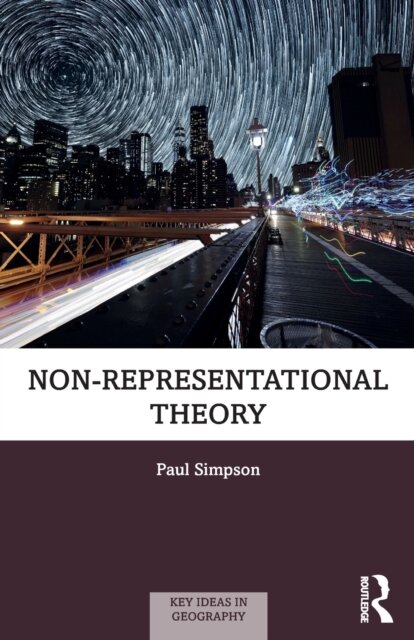
Non-representational Theory
€ 65,90
Informação do Produto
| ISBN | 9781138552197 |
|---|---|
| Autores | Paul Simpson |
| Editora | Taylor & Francis Ltd |
| Formato | Capa mole |
| Número de páginas | 254 |
| Peso (kg) | 0,342 |
| Data de Publicação | 23/11/2020 |
| Preço (iva excl.) | € 62,17 |
| Imposto | € 3,73 |
| Preço (iva inc.) | € 65,90 |
| Disponibilidade | 2 unidades em armazém externo |
Descrição do Produto
Non-representational Theory explores a range of ideas which have recently engaged geographers and have led to the development of an alternative approach to the conception, practice, and production of geographic knowledge. Non-representational Theory refers to a key body of work that has emerged in geography over the past two and a half decades that emphasizes the importance of practice, embodiment, materiality, and process to the ongoing formation of social life. This title offers the first sole-authored, accessible introduction to this work and its impact on geography.
Without being prescriptive the text provides a general explanation of what Non-representational Theory is. This includes discussion of the disciplinary context it emerged from, the key ideas and themes that characterise work associated with Non-representational Theory, and the theoretical points of reference that inspires it. The book then explores a series of conjunctions of Non-representational Theory and..., taking an area of geographic enquiry and exploring the impact Non-representational Theory has had on how it is researched and understood. This includes the relationships between Non-representational Theory and Practice, Affect, Materiality, Landscape, Performance, and Methods. Critiques of Non-representational Theory are also broached, including reflections on issues on identity, power, and difference.
The text draws together the work of a range of established and emerging scholars working on the development of non-representational theories, allowing scholars from geography and other disciplines to access and assess the animating potential of such work. This volume is essential reading for undergraduates and post-graduate students interested in the social, cultural, and political geographies of everyday living.