
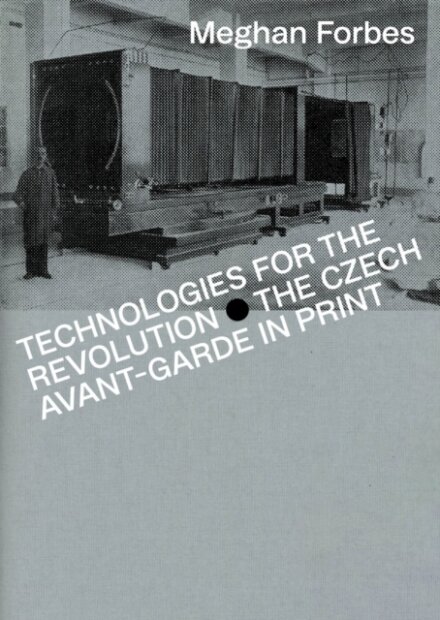
Technologies for the Revolution
€ 69,90
Informação do Produto
| ISBN | 9788024660509 |
|---|---|
| Autores | Meghan Forbes |
| Editora | Karolinum,Nakladatelstvi Univerzity Karlovy,Czech Republic |
| Formato | Capa mole |
| Número de páginas | 240 |
| Peso (kg) | 1,282 |
| Data de Publicação | 11/11/2025 |
| Preço (iva excl.) | € 65,94 |
| Imposto | € 3,96 |
| Preço (iva inc.) | € 69,90 |
| Disponibilidade | 4 unidades em armazém externo |
Descrição do Produto
Offers a close look at the collaboration of the Czechoslovak avant-garde with print technicians to produce radical experiments in book and periodical production. The most influential avant-garde group in interwar Czechoslovakia called for a revolution enacted via print. Devetsil, founded in 1920 and comprised of leftist artists, architects, actors, and poets, undertook an ambitious publishing effort, aiming to reach urban individuals on the street and in their homes in the years following the First World War. It was a revolution that explicitly condemned any call to arms; instead, it proposed taking up new technologies that expanded possibilities for the photomechanical reproduction and dissemination of text and image in print. This utopic vision was embodied in thousands of physical revolutions made by the machine of the printing press. Technologies for the Revolution offers a cultural history of print that engages questions of labor and capital embedded in material culture and in the history of the book. This new publication offers a nuanced portrait of leftist art practices in Czechoslovakia in the interwar period and charts networks of exchange across Europe by exploring the ways in which Devetsil used its printed matter. The Czech -ism of Poetism is articulated as a sustained working through of Devetsil’s position as the group aimed to accommodate both new technology and the role of poets and artists in a postwar society, all while striving for a socialist utopia. Technologies for the Revolution is the result of nearly a decade of research conducted in the libraries and archives of Prague, Berlin, Paris, and New York, as well as close work with museum and private collections. Conceived as an exhibition space in print, this book sheds new light on Devetsil and Poetism, as well as on the group’s social and artistic activities through an object-based analysis of various media— architecture, typography, poetry, photography, film, and performance—to propose a more synthetic and variegated understanding of Devetsil’s unique contribution to the European avant-gardes.